EV
HMRC: BiK for electric cars: Company car tax in 2026/27
As the UK pushes towards a greener future, the Benefit in Kind (BiK) rates for electric cars have become a hot topic for company car drivers and fleet managers alike.
Here, we will explore the current BiK rate for electric vehicles, how it compares to traditional fuel types, and what changes can be expected in the coming years. For fleets managing both electric and conventional vehicles, WEX fleet fuel cards help businesses track running costs, simplify reporting, and manage the transition to lower-emission mobility.
Key takeaways
- The EV BiK rate is 4% in 2026/27: far below the up to 37% rates applied to petrol and diesel company cars.
- BiK is calculated as: P11D value × appropriate percentage × your income tax rate.
- No fuel benefit charge on electricity: employer-paid EV charging (home or work) carries no fuel benefit charge, because HMRC does not treat electricity as a taxable fuel.
- Rates rise gradually but stay low: EV BiK increases to 5% (2027/28), 7% (2028/29) and 9% (2029/30), still well below conventional vehicles.
What is BiK rate?
Benefit in Kind (BiK) (also referred to as company car tax) is a tax on employees who receive perks or benefits from their employer in addition to their salary. For company cars, the BiK rate is a percentage of the vehicle’s value that is added to the employee’s taxable income. This rate varies depending on the car’s CO2 emissions, making electric cars particularly attractive due to their low or zero emissions.
How is BiK calculated?
The calculation for BiK for electric cars involves three main factors when the vehicle is provided as a company car:
- The car’s P11D value (list price including options, VAT, and delivery charges)
- The BiK percentage rate (based on CO2 emissions)
- The employee’s income tax bracket
The formula is: (P11D value x BiK percentage rate) x Income tax rate.
For example, if an electric car has a P11D value of £40,000, the current BiK rate of 4% for 2026/27, and the employee is in the 40% tax bracket, the annual BiK tax would be: (£40,000 × 4%) × 40% = £640 per year.
By comparison, a petrol car with the same P11D value at a 33% BiK rate would be (£40,000 × 33%) × 40% = £5,280,which is more than eight times higher.
Understanding the P11D value
The P11D value is the official list price of the car when new, including the manufacturer’s list price, VAT, delivery charges and factory-fitted options. It excludes the first registration fee and vehicle excise duty (road tax). Importantly, the P11D value does not reduce as the car ages, it remains fixed at the original list price for as long as the car is provided as a company benefit.
What is the BiK rate for electric cars in 2026/27?
In 2026/27, the BiK rate for electric cars is 4%. This is a modest increase from 3% in 2025/26 but still offers a significant advantage over petrol, diesel or hybrid vehicles.
The government has confirmed a gradual increase:
| Tax year | EV BiK rate |
| 2025/26 | 3% |
| 2026/27 | 4% |
| 2027/28 | 5% |
| 2028/29 | 7% |
| 2029/30 | 9% |
Even with these increases, electric cars maintain a substantial tax advantage over conventional vehicles.
BiK rates by CO₂ emissions and electric range
| Vehicle type | CO₂ | Electric range | BiK rate |
|---|---|---|---|
| Fully electric | 0g/km | — | 4% |
| Plug-in hybrid | 30g/km | ~50 miles | 14% |
| Petrol | 130g/km | — | 32% |
| Diesel | 110g/km | — | 28%* |
EV BiK rates are set to increase gradually from 4% in 2026/27 to 9% in 2029/30. See HMRC guidance on company car BiK rates for the latest rates.
*Diesel cars may be subject to a separate 4% diesel supplement, depending on the vehicle and its emissions standard.
How does the BiK tax on electric cars compare with hybrid or petrol cars?
The difference in BiK rates between electric cars and their petrol, diesel, or hybrid counterparts is substantial. While electric cars benefit from a 4% rate in 2026/27, other vehicles are taxed on CO₂ emissions, which can be far higher.
For example:
| Vehicle | BiK rate |
|---|---|
| Pure electric car with zero emissions | 4% |
| Plug-in hybrid with emissions of 1–50g/km and an electric range of 130 miles | 4% |
| Petrol car with emissions of 100g/km | 26% |
| Diesel car with emissions of 150g/km | 36% |
This stark contrast demonstrates the financial incentives for choosing electric company cars.
According to Gov.uk, petrol or diesel vehicles can have BiK rates as high as 37%.
Do you pay BiK tax on electric cars?
Yes, employees pay BiK tax for electric cars as part of the company car tax system, but at a significantly reduced rate compared with conventional vehicles. The current 4% rate for electric cars means employees can enjoy the benefits of a company car with a much lower tax liability.
It is worth noting that while the BiK rate for electric cars is low, it’s not zero. Even at 4%, the tax burden remains minimal compared to other fuel types.
The impact of these low BiK rates on electric vehicle adoption has been significant. Fleet News reports that the introduction of the zero-percentage BiK rate in 2020 has helped thousands of company car drivers make the switch to electric vehicles.
For businesses considering transitioning their fleet to electric vehicles, the BiK savings can be substantial. Salary sacrifice schemes for fleets are gaining unprecedented popularity, thanks to the favourable BiK tax treatment for electric vehicles.
Fuel benefit charge: why electricity is different
For petrol or diesel company cars, if the employer pays for private fuel, a separate fuel benefit charge applies. This is calculated using a fixed annual amount multiplied by the car’s BiK percentage.
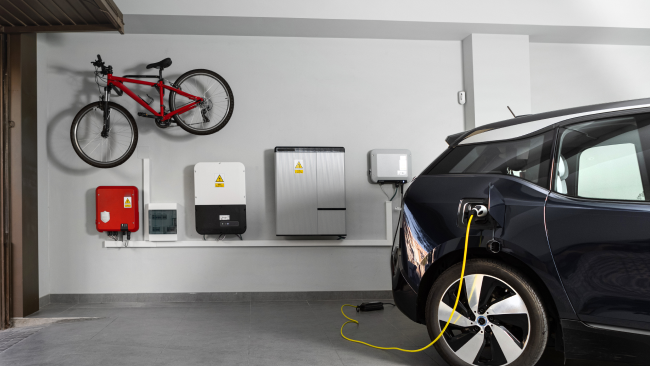
For electric vehicles, there is no fuel benefit charge because HMRC does not treat electricity as a fuel for these rules. Employers can reimburse home charging, provide workplace charging and, subject to conditions, install home charge points without triggering a fuel benefit charge. This is a significant, often-overlooked advantage of electric company cars.
Company EV vs personal car: BiK or mileage?
Some employees weigh a company EV (paying BiK) against using their own EV and claiming business mileage.
Using a personal vehicle, you can claim tax relief on AMAPs: 55p per mile for the first 10,000 business miles in 2026/27, then 25p thereafter. Where a company EV is provided, HMRC’s Advisory Electricity Rate lets employers reimburse business charging at 7p per mile for home charging or 15p per mile for public charging.
A company EV has a predictable tax cost, with the employer covering running costs, while a personal EV allows the driver to retain ownership.
For fuller detail, see the WEX guide to business mileage rate.
Are electric cars 100% tax deductible (capital allowances)?
New and unused fully electric cars are eligible for a 100% first-year allowance for corporation tax, subject to HMRC rules. Always consult your accountant or tax adviser.
How does salary sacrifice work for electric cars?
Salary sacrifice is one of the most popular ways for employees to access an electric car, and the low Benefit-in-Kind (BiK) rate is what makes it work.
Under a salary sacrifice arrangement, an employee gives up part of their gross salary in return for the use of an EV, taking the cost out of pay before income tax and National Insurance are applied.
For most non-cash benefits, HMRC’s Optional Remuneration Arrangement (OpRA) rules cancel out this tax advantage by applying tax to the higher of the salary sacrificed or the benefit’s actual value. Electric cars are the key exception:
- CO₂ Threshold: Cars with emissions of 75g/km or less are excluded from OpRA rules.
- Tax Treatment: Fully electric vehicles are taxed only on their normal BiK value (4% in 2026/27), ignoring the higher salary sacrifice amount.
This exclusion is precisely why EV salary sacrifice retains its full tax advantage while most other schemes have lost theirs.
The savings benefit both sides:
- Employees save income tax and employee National Insurance on the salary given up, paying only the small BiK charge on the car.
- Employers save Employer National Insurance (15% in 2026/27) on the reduced salary, less the low Class 1A NI due on the EV’s BiK value.
Across a fleet, this makes electric vehicles noticeably cheaper to offer than traditional company cars or cash allowances.
WEX fleet fuel cards and fleet management solutions help businesses run these vehicles day-to-day, consolidating tracking, charging, and running costs across electric and mixed fleets in one place.
Conclusion
Electric company cars remain one of the most tax-efficient options in 2026/27: a low 4% BiK rate, no fuel benefit charge on electricity, and lower employer National Insurance. Keeping fleet policies aligned with the current rates helps businesses budget accurately and stay compliant. WEX fleet fuel cards and fleet management help you track running costs and manage electric and mixed fleets in one place