


Stay connected
Subscribe to our fleet blog and follow us on social media to receive all our fuel and energy industry insights.
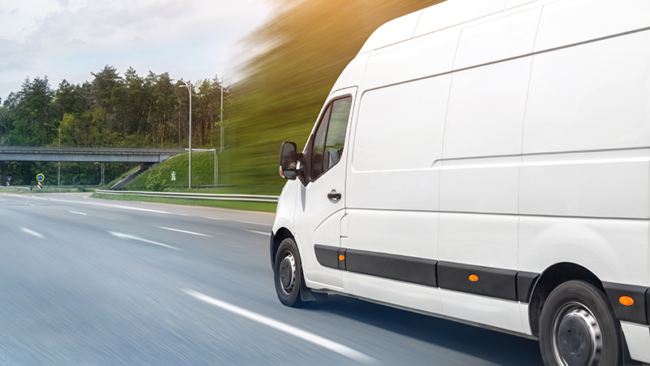
Using the latest in edge computing technology, dash cams serve as vigilant guardians of the road and your drivers. While continuously capturing video, these cameras are designed to alert you to high impact vehicular incidents. Dash cams help you prioritize and address the most significant events quickly and effectively.
Telematics paired with a dash camera will bring added benefits to your business. Download our report to learn more.
Dash cams are invaluable to your business. This is because the captured footage safeguards your two most precious resources: your drivers and your vehicles. These advanced tools offer operational insights, enhancing the protection of your drivers, and protect your business from risk.
NSTSCE reports that 87% of commercial crashes in the U.S. are caused by either avoidable driver error or risky driving behavior. With a dash camera installed, you can track driver performance, recognize distracted driving, and capture a record of what happened both at the front of the vehicle and in the cab. These records give you reliable insights and help you identify and put efficiency and safety rules into practice.
Read on to learn five ways dash cam technology is good for your business and will save you money.
Download our infographic to learn the ways a telematics program can improve your commercial fleet operations.
Dash cameras come with a variety of bells and whistles. Integrate them into an existing telematics solution and you’re automatically enriching your data. This is because with telematics, a dash camera gives a view into both critical driving events and risky driver behaviors. Paired with a telematics tool, you get more video evidence and better oversight of your daily operations. With a dash cam more vital operational data can be plugged into your telematics application.
One benefit of pairing a dash camera with telematics is the visibility you get into a driver’s activities as he travels his daily route. A fleet manager can select instances during a driver’s day where critical moments have occurred on the road and then review video of those moments within the application. If a driver is on their phone or not paying attention to the road, distracted driving can be detected by the in-cab camera. Distracted driving or a driver mistake resulting in a collision become easier to solve for with a dash cam. A fleet manager will have more evidence to determine fault, liability, and make decisions on how to reduce the possibility of another accident. A dash camera coupled with a telematics tool will help your business avoid costly accidents while increasing driver safety.
In-vehicle cameras help businesses decrease risk. By gathering footage of drivers in action on the road, fleet managers can then show drivers real-life examples of where they went wrong. They can then use the captured footage to coach their staff. Additionally, in-cab cameras used with telematics offer real-time alerts to your drivers allowing them to recognize risky behavior as it occurs and make necessary corrections in the moment.
There are a variety of dash camera solutions on the market, the best of which use positive reinforcement throughout the driver experience. Positive reinforcement builds driver confidence and improves performance.
A high quality system will also produce a driver scorecard to encourage driver improvement through gamification. Based on performance, a driver can see the improvements they are making over time. These scorecards act as a powerful incentive for drivers to improve their driving skills. Fleet managers can share each driver’s score with the whole crew to encourage a safety-conscious culture on the team. These simple scorecards help drivers understand where they rank compared to other drivers and encourage them to improve to catch up to peers.
Dash cameras are a great tool for any business operating commercial vehicles: their installation alone means you’ll likely experience a reduction in insurance premiums. With driver monitoring and increased accountability when accidents occur, some insurers even require them. They see dash cameras as a precautionary measure for fleets.
Dash cam use continues to gain momentum in the commercial space. There’s a reason for the trend: dash cameras benefit both fleet owners and insurance companies. If you don’t see a benefit to installing dash cameras for your entire fleet, you can also single out at-risk drivers for dash camera installation.
The Journal of Safety Research states that businesses that have implemented a dash cam solution with driver feedback have seen an 86% reduction in the cost of vehicle crashes.
The Federal Motor Carrier Safety Administration states that businesses pay an average of $90K per incident involving their drivers. The good news is that dash camera video footage can be used as evidence in the case of a crash or accident.
On-board cameras typically have two camera views. One view shows the inside of the vehicle and the other shows the road from the driver’s perspective. Proving who is at fault in a collision can be extremely valuable and can be used to protect good drivers when they’re not the cause of an accident.
In the case of a critical event or accident, your fleet management software ideally collects all the data from the vehicle at the time of the incident. When in-cab video is paired with a quality telematics application the insights surrounding that accident expand. Precise vehicle routes, diagnostics, and operator behavior are readily available to the fleet manager with these combined tools. Additionally, dash cameras enhance your telematics data set with 30-second video before and after the incident. The video includes both points of view (inside the cab and driver view of the road) and footage is automatically uploaded to your cloud-based telematics application.
Drivers responsible for operating a company vehicle are aware that an accident could happen at any moment. If an accident occurs and the driver is not responsible, they can be confident knowing their dash camera will provide accurate evidence of what occurred during the collision and support their innocence.
According to the National Insurance Crime Bureau, commercial vehicles are often targeted in insurance fraud. Perpetrators prey on what they perceive to be new vehicles, rental cars, or commercial vehicles because those classes of vehicles tend to be well-insured. Dash cameras are useful in these situations because they provide evidence of what occurred on the road and in the cab at the time. Capturing video evidence to protect high performing drivers places accountability on the party at fault and exonerates your driver when they’re not to blame.
There are many dash camera solutions in the marketplace today. When conducting your research, you’d ideally work with your fleet card provider. They can help you navigate what can be a complicated process. It’s important to start the discussion outlining the challenges you’re currently facing. Your fleet card provider can then review the options with you, weigh the pros and cons, and offer demonstrations of different cameras before you make a purchase. As a subject matter expert, your fleet card partner can help you understand every aspect of the solution before you make a decision on which camera to purchase. This includes camera functionality, integration options, vehicle installation options, and pricing.
To find the right fuel card provider for integrating dash cams and telematics into your fleet management tech stack, we recommend exploring the different ways each potential fleet card provider approaches customer support and ongoing terms of service. WEX has a team providing customer support and educational services on how to use dash cams and telematics together. WEX wants you to have a great experience with easy-to-use, reliable tools.
Adding dash cameras to your fleet will help you save money on incident-related costs and reduce overall operating expenses. This technology comes with a significant return on investment and can be seamlessly integrated into your existing fleet management toolkit. WEX prioritizes helping customers find top tier dash cameras with the best features at competitive prices. Work with WEX to adopt these tools.
It starts with applying for a fleet card.
To learn more about WEX, a dynamic and nimble global organization, please visit our About WEX page.
Editorial note: This article was originally published on June 7, 2023, and has been updated for this publication.
Resources:
NSTSCE
Journal of Safety Research
Security Bros
Samsara
National Insurance Crime Bureau
Automotive Fleet
Federal Motor Carrier Safety Administration