



Stay connected
Subscribe to our Inside WEX blog and follow us on social media for the insider view on everything WEX, from payments innovation to what it means to be a WEXer.

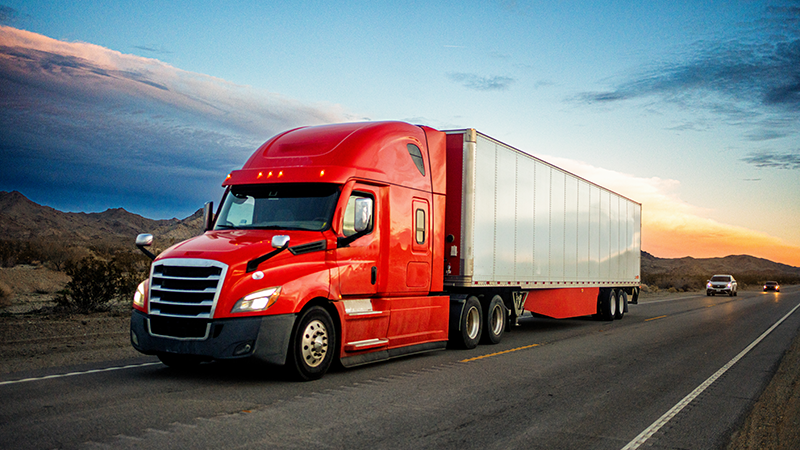
The trucking industry has always been a barometer for broader economic health. But lately, the road ahead has been anything but predictable. With increasingly complex cross-border transportation, shifting global trade policies, and inflation putting pressure on every aspect of business, trucking executives are forced to rethink the way they operate.
While volatility is nothing new, today’s challenges are different in scale and scope. Tariffs are impacting critical equipment imports, cross-border freight is facing fresh scrutiny, and inflation continues to push up operational costs. The question for industry leaders is no longer if these disruptions will affect your business—but how you will respond.
Trucking has always been a business of tight margins, long miles, and sharp decision-making. But today’s operating environment is pushing even the most seasoned leaders into uncharted territory. Inflation, shifting labor dynamics, and rising interest rates are straining the financial foundation of many carriers. And now, the war in Iran, global trade conflicts, and tariff escalations are introducing new layers of unpredictability.
Fuel price volatility has become an additional burden as we come to the close of Q2 2026. As Emmett Lindner reports for The New York Times, we have just entered the worst disruption to oil supplies in history. While the long-term implications remain uncertain, the short-term impact is already being felt in parts pricing, cross-border operations, and freight availability.
Whether you run a large national trucking company or an independent trucking operation, the message is the same: resilience is no longer a nice-to-have—it’s mission critical. To survive and succeed, leaders must rethink their cost structures, streamline operations, and anticipate change before it happens.
From new tariffs on Chinese vehicles to shifting trade agreements with Mexico and Canada, the rules of global commerce have evolved fast. For trucking companies, these changes impact more than just freight lanes. They affect parts pricing, equipment availability, and freight demand.
Original equipment manufacturers (OEMs) and parts suppliers are already passing on higher costs. In some cases, long-standing sourcing relationships are being reevaluated as companies look for tariff-friendly alternatives. For cross-border carriers, compliance requirements and customs delays add additional complexity, and the freight demand has been on a downward trend for a long time now.
Inflation continues to ripple through the trucking industry: Fuel costs are volatile, insurance premiums are climbing, labor shortages are pushing up wages, and maintenance costs are on the rise as fleets delay upgrades and push older vehicles further.
Commercial vehicle insurance premiums have experienced some of the highest increases across all lines of insurance in the last few years. A shortage of vehicle parts has pushed repair timelines out, leaving trucks idle for longer periods of time, and tariffs are only exacerbating this problem.
For carriers operating on razor-thin margins, even small changes in operational costs can have outsize impacts.
Uncertainty doesn’t just affect your balance sheet—it seeps into every part of your operation. When costs are unpredictable, decision-making gets reactive. Investments get delayed. Maintenance gets deferred. And sometimes, fraud gets overlooked.
In fact, economic pressure is a common catalyst for internal misuse and first-party fraud. Just like in financial downturns, fleet card misuse or unauthorized spending can spike when oversight is lax or when employees are feeling personally squeezed.
The hidden costs of inaction are real. They might include missed deliveries, lost business, eroded customer trust, or compounding inefficiencies that chip away at profitability.
While no one can predict the next tariff announcement or fuel spike, trucking executives can take clear, strategic steps to build resilience with the following tactics:
Trucking companies that thrive in this environment are ones that adapt quickly and think long-term. Building resilience means embedding flexibility into your operations: from diversifying your supply chain to rethinking how you manage fuel spend.
It also means leveraging the tools available to you—like fuel cards with spend controls, two-factor authentication (WEX’s Dynamic Prompt), and fraud monitoring. These tools all help your business reduce risk and improve visibility.
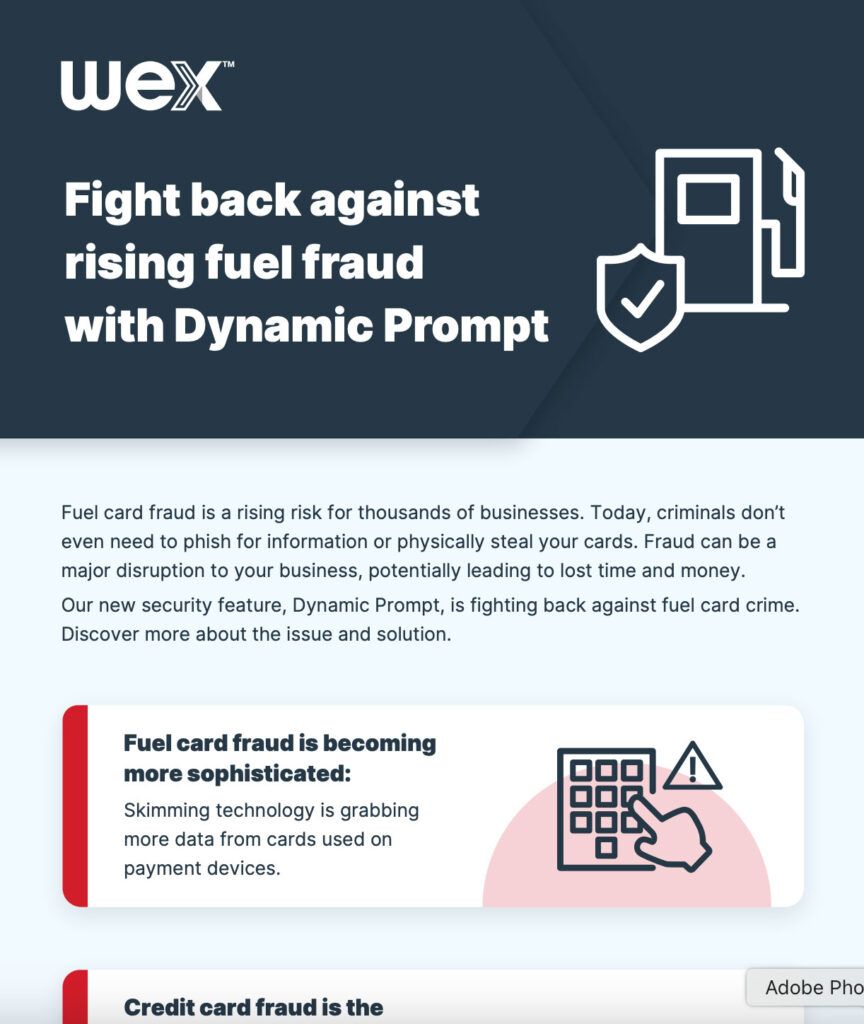
Download this one-pager and learn how Dynamic Prompt’s two-factor authentication can help your business prevent fuel card fraud.
When your team can act on real-time data, and when your systems are built to flag inefficiencies before they become costly, your business becomes far less reactive and far more prepared.
As mentioned, one way economic downturns can impact business norms is with increases in fraud, and preventing fraud is all about having the right systems in place in advance of an attack. A fleet card program that gives you visibility, control, and built-in fraud protection is one of the most effective ways to avoid fraudster threats to your business.
With WEX, you get:
If you’re actively looking for ways to reduce fraud and gain fuel spend visibility, the right partner can make all the difference. Smart fraud prevention uses data to predict and protect against fraud, keeps your business moving, and your spend right where you want it.
Economic turbulence will likely continue throughout the coming months. Adapting to the headwinds we’re facing will help your business survive. With the right tools, partnerships, and mindset, trucking executives can do more than survive—they can lead.
WEX is your partner through all the ups and downs you may face. For over 42 years, we’ve stood by our customers, through every high and low. You can count on us to remain a steady, reliable partner, offering support, guidance, and unwavering commitment as we navigate this storm together.
By proactively managing costs, securing operations, and planning for uncertainty, you position your fleet to weather today’s challenges and seize tomorrow’s opportunities, and WEX is here for you every step of the way.
Learn more on how to better manage your over-the-road fleet:
All fleet cards are not the same, and different types of fuel cards suit the needs of different kinds and sizes of businesses. View WEX’s fleet card comparison chart to see which fleet fuel card is right for you.
Resources:
ProTrans
Dominion Risk Advisors
McKinsey
The New York Times