





Stay connected
Subscribe to our corporate payments blog to stay on top of payment innovations.

When you hear the word “sustainability,” your mind probably jumps to recycling bins, electric vehicles, and solar panels. But sustainability isn’t just about the environment. It also applies to how businesses run their operations. That includes how they manage payments.
Sustainable accounts payable (AP) practices aren’t just about going paperless or using less energy (although that’s part of it). A sustainable AP strategy may also have a real financial impact. It can cut costs, reduce risk, strengthen supplier relationships, and help your business grow.
Let’s take a closer look at how sustainable AP contributes to long-term business health and how to get started.
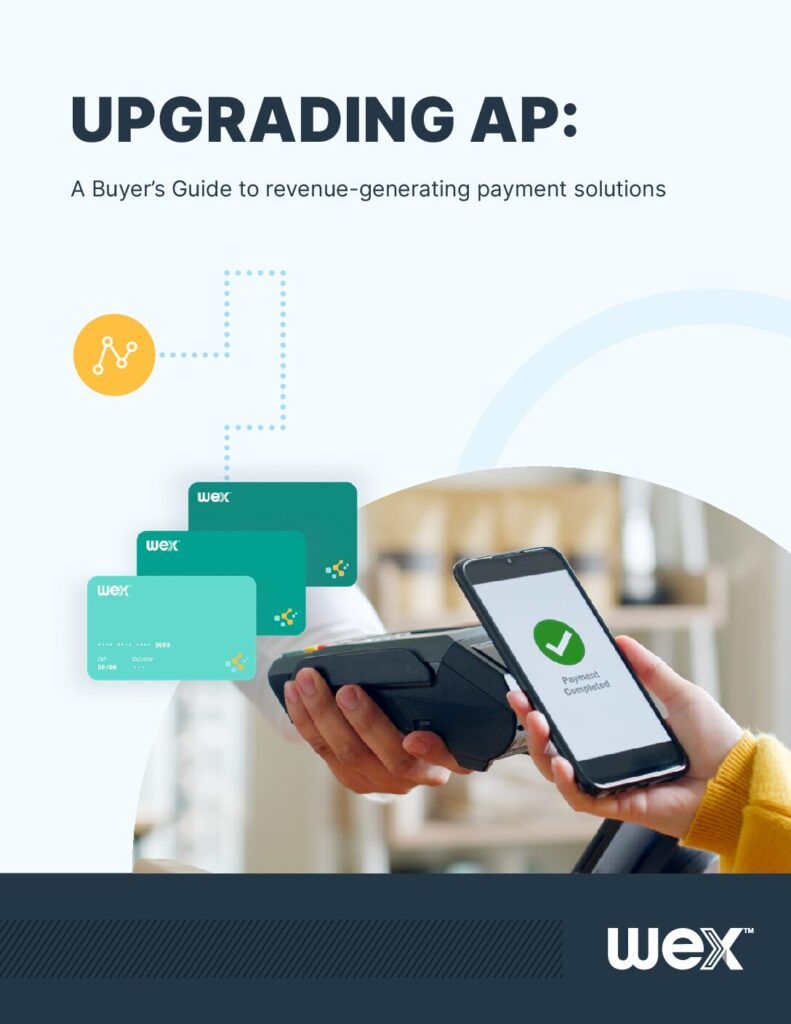
Download our AP Buyer’s Guide to compare options, see how virtual cards stack up, and find the best fit for your accounts receivable and payable workflow
Let’s start with the obvious: Paper-based processes can get expensive. Printing, mailing, and storing paper invoices and checks take time and money, not to mention, space. Then there’s the cost of fixing errors, tracking down lost documents, or dealing with fraud because of unsecured paper trails.
When you shift to electronic invoicing and digital payments (like ACH or virtual cards), your team may be able to save time, avoid manual mistakes, and speed up the entire payment process. That means fewer late fees, fewer supplier disputes, and more time to focus on higher-value work.
Automating your AP process may reduce the cost of each transaction and gives you better visibility into spending. And by ditching the paper, you’re cutting down on your environmental footprint too.
Sustainable AP isn’t just about internal processes. It also affects how you work with suppliers. When you pay them faster, more reliably, and in the format they prefer, it helps build trust and that trust pays off. Digital payments make it easier for both sides to track transactions, reduce waste, and meet those goals.
But even if sustainability isn’t on their radar, your suppliers will appreciate getting paid quickly and clearly. That goodwill can open doors for better terms, preferred pricing, or smoother negotiations down the line.
| Traditional AP | Sustainable AP |
| Paper checks –> | Digital payments |
| Manual data entry –-> | Automated workflows |
| Mailroom + storage –> | Cloud-based systems |
| The practice | The result |
| Use virtual cards for payments | Replace checks with secure digital payments that can generate rebates. |
| Automate invoice settlement and payments | Cut manual work and speed up cycle times with workflow automation. |
| Switch to cloud-based platforms | Cloud-based recordkeeping means less paper waste and no filing cabinets. |
| Encourage supplier adoption of digital payments | You and your suppliers both benefit from faster, more secure payments — and stronger working relationships. |
One of the best parts of digital AP? Control and visibility.
With better payment data and more control over timing, your team may be able to hold on to cash longer without delaying payments.
You can also take advantage of early pay discounts more easily. Some suppliers offer discounts for fast payment, but it’s hard to capitalize on that when your team is buried in manual processing.
Again, that’s a sustainable move in both senses of the word: It helps build lasting supplier relationships and helps your business grow responsibly.
Paper checks are not only outdated—they’re risky. They’re one of the most common payment types used in fraud.
According to the 2025 AFP Payments Fraud and Control Survey, checks continue to be the most vulnerable payment method, with 63% of respondents experiencing attempted or actual fraud in 2024. On the other hand, only 5% of respondents experienced virtual card fraud. What makes virtual cards special is that they can be set for one-time or limited use, with exact amounts and expiration dates, minimizing the chance of misuse or error.
That added layer of protection could help reduce financial risk.
If you’re just beginning to think about sustainability in your AP process, don’t feel like you have to change everything overnight. Start by identifying the biggest paper-heavy or manual pain points and look for digital alternatives.
A few questions to ask:
Once you know where the gaps are, you can start building a plan that’s good for the environment and for your business.
Sustainability doesn’t have to come at the expense of profitability. In fact, when it comes to AP, it often leads to better outcomes on both fronts.
For more insights and updates on corporate payments, check out:
Stay up to date on the latest in business payments by subscribing to our blog! Simply hit the “Subscribe” button above or submit your email address in the form below.
The information in this blog post is for educational purposes only. It is not legal, tax or investment advice. For legal, tax or investment advice, you should consult your own legal counsel, tax, and investment advisers.