




Stay connected
Subscribe to our Inside WEX blog and follow us on social media for the insider view on everything WEX, from payments innovation to what it means to be a WEXer.
Life rarely follows the plan. A child wakes up sick and needs to see a doctor. A pair of glasses gets broken on the way to work. A routine dental appointment turns into an unexpected procedure, or a prescription you weren’t planning for suddenly becomes an expense. These moments may be ordinary, but the costs that come with them can still create financial stress, especially when they aren’t part of the household budget.
With HSA Day just around the corner, it’s a good time to take a closer look at one of the most practical reasons to contribute to a health savings account (HSA): preparing for life’s unscripted healthcare expenses.
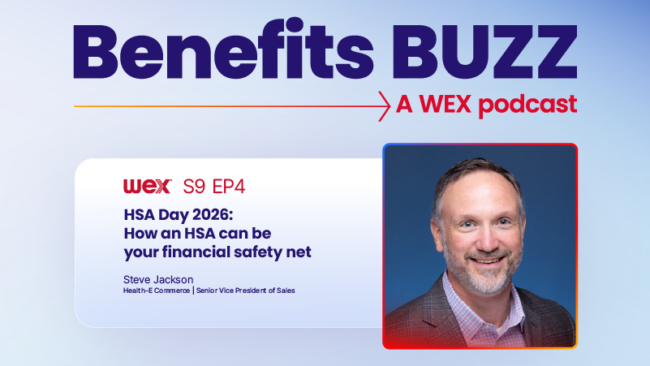
Check out our recent episode of Benefits Buzz, when we spoke with Steve Jackson, SVP of sales at Health-E Commerce, about how employers can help employees understand the “why” behind their HSA and see it as more than another benefits account.
Most people are comfortable budgeting for predictable expenses like rent, groceries and monthly bills. Healthcare can be different. Even when we’re thoughtful about our healthcare spending, unexpected expenses can show up at exactly the wrong time. A child may need an urgent care visit, glasses may break, or a routine appointment may lead to an unexpected treatment. The stress isn’t always about the size of the expense—it’s that it wasn’t part of the plan.
That’s where an HSA can provide both financial and emotional value. Setting money aside for qualified healthcare expenses can help make an unexpected cost more manageable and give employees a greater sense of control when life doesn’t go according to plan. The goal isn’t to predict exactly what will happen; it’s to be prepared when something does.
An HSA is a tax-advantaged account available to individuals who meet applicable eligibility requirements, and it can be used to save for qualified medical expenses. Contributions can receive favorable tax treatment, earnings can grow tax-free, and withdrawals for qualified medical expenses are generally tax-free. Unused HSA funds generally roll over from year to year, allowing employees to build a healthcare reserve over time rather than feeling like they need to spend their balance within a single plan year.
That long-term potential is important for employees who may feel they don’t have enough extra money to contribute. Preparedness doesn’t have to mean fully funding an HSA overnight. Small, consistent contributions can add up, and employer contributions can complement employee savings. Because employees generally retain ownership of their HSA when they leave an employer, the account can also remain a resource throughout different stages of their career and life.
For employers, communicating the features and tax advantages of an HSA is important, but technical details alone don’t always make the benefit feel relevant. Instead, employers can start with situations employees recognize: the child who falls at the playground, the glasses that get accidentally sat on, the “routine” appointment that requires unexpected treatment or the prescription that wasn’t in the monthly budget. These everyday examples help employees visualize when they might actually use the money they’re setting aside.
The key is to make the message reassuring rather than fear-based. The goal isn’t to make employees worry about what could go wrong; it’s to acknowledge that life is unpredictable and give them a practical way to prepare. You can’t predict the unexpected, but you can prepare for it. Framed this way, an HSA becomes less about another benefits account and more about building confidence and control around future healthcare expenses.
Once employees understand the “why,” employers can make it easier for them to take action. Clear communication about how contributions can add up, what employer contributions are available and how to access funds for qualified expenses can help employees move from simply having an HSA to actively using it as part of their financial strategy. Reinforcing these messages throughout the year, not just during open enrollment, can also keep the benefit top of mind.
As HSA Day approaches, it’s an opportunity to remind employees that preparing for healthcare expenses doesn’t have to be complicated. An HSA can help create a financial cushion for the moments you can’t plan for, while small contributions today can support greater preparedness tomorrow.
You’re not saving because you expect something to go wrong. You’re saving because you know life happens.
Check out our HSA Day page for more helpful HSA resources!
The information in this blog post is for educational purposes only. It is not legal or tax advice. For legal or tax advice, you should consult your own counsel.
Copyright ©2026 WEX Inc. All rights reserved. The information in this document is subject to change without notice.